

Fruit Sugar Market Gains Momentum as Demand for Natural Sweeteners Accelerates Worldwide
fruit sugar market
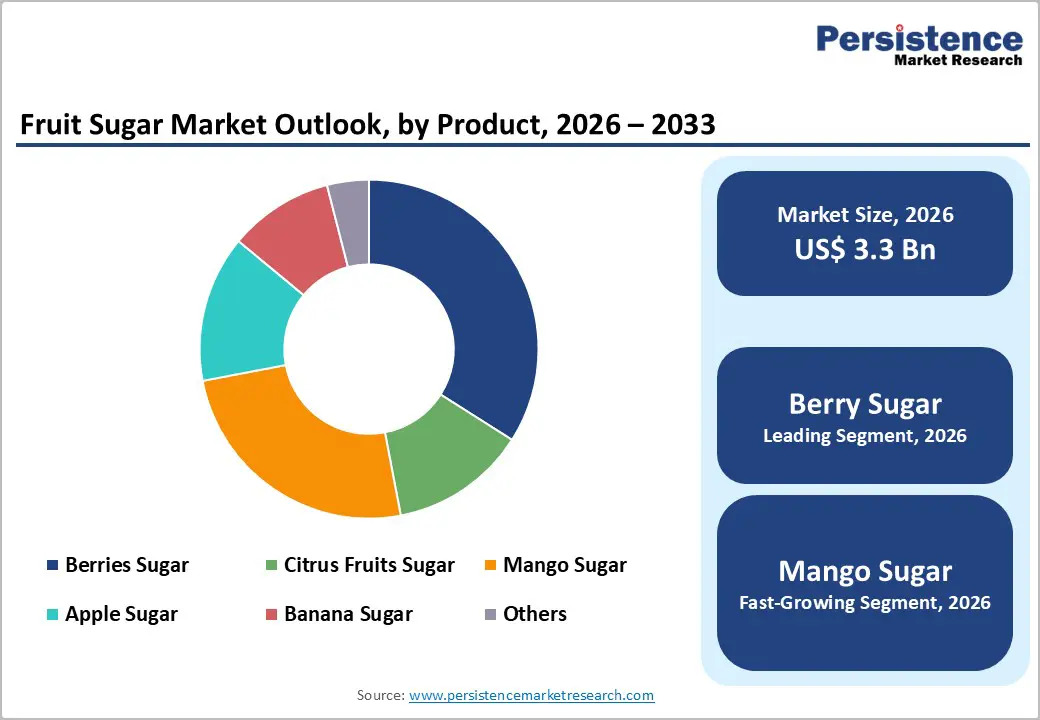
Fruit sugar market to grow from US$3.3Bn in 2026 to US$5.3Bn by 2033, registering a 7.1% CAGR amid rising demand for natural sweeteners.
LONDON, UNITED KINGDOM, June 16, 2026 /EINPresswire.com/ -- The global fruit sugar market is entering a period of sustained expansion, supported by rising consumer interest in natural sweetening ingredients and cleaner food labels. Industry estimates indicate the market will be valued at US$3.3 billion in 2026 and is projected to reach US$5.3 billion by 2033, reflecting a compound annual growth rate (CAGR) of 7.1% during the forecast period. Fruit sugars, extracted or concentrated from berries, citrus fruits, apples, mangoes, and bananas, are increasingly being adopted across food, beverage, and nutrition categories.
Download Your Free Sample & Explore Key Insights: https://www.persistencemarketresearch.com/samples/21187
Rising Demand for Healthier Sweetening Solutions
Analysts attribute the market’s growth to increasing awareness of health concerns linked to excessive consumption of refined sugar. Rising rates of obesity, diabetes, and metabolic disorders have encouraged consumers to seek alternatives perceived as more natural and minimally processed. Public health campaigns and regulatory efforts promoting sugar reduction have also influenced purchasing behavior. As a result, manufacturers are reformulating products with fruit-derived sweeteners that provide mild sweetness, recognizable sourcing, and flavor characteristics that complement a wide range of modern food and beverage products.
Berry Sugar Leads Product Segment
By product type, berry sugar is forecast to lead the market with a 34% revenue share in 2026. Demand is being supported by consumer preference for premium ingredients associated with antioxidant-rich fruits such as strawberries, blueberries, and raspberries. Berry-derived sweeteners are increasingly incorporated into yogurts, beverages, and functional foods, where they deliver sweetness alongside natural flavor enhancement. Mango sugar is expected to emerge as the fastest-growing category, benefiting from tropical flavor trends, strong raw material availability, and expanding application opportunities.
Food and Beverage Sector Dominates Demand
The food and beverage segment is anticipated to remain the largest application, accounting for more than 45% of market revenue in 2026. Producers are incorporating fruit sugars into soft drinks, flavored dairy products, sauces, snacks, and convenience foods to support clean-label claims and sugar-reduction objectives. Industry participants note that fruit sugars can contribute balanced sweetness, desirable texture, and flavor complexity. Their versatility has increased adoption across mainstream products as well as premium and health-oriented offerings targeting diverse consumer groups globally.
Growing Opportunities in Bakery and Specialty Nutrition
Bakery and confectionery applications are forecast to experience particularly strong growth as brands introduce reduced-sugar recipes and premium products. Fruit sugars support moisture retention, browning, and texture development, making them valuable ingredients for pastries, cakes, fillings, and natural confectionery. Manufacturers are also exploring their use in sports nutrition, infant nutrition, medical diets, and organic foods. These specialty segments offer opportunities for differentiation because consumers often prioritize ingredient transparency, natural sourcing, and functional benefits when making purchasing decisions.
Challenges from Taste and Alternative Sweeteners
Despite favorable momentum, the industry faces challenges. Taste perception and consistency remain important considerations because some fruit-derived sugars display distinctive flavor notes or varying sweetness intensities. Seasonal and regional differences in raw material quality can also affect standardization efforts. In addition, competition from established alternatives including stevia, monk fruit, refined sugar, and high-fructose corn syrup continues to influence pricing dynamics and formulation choices across global food manufacturing operations.
Get Custom Insights Designed for Your Businecss: https://www.persistencemarketresearch.com/request-customization/21187
Technology and Sustainability Drive Future Growth
Technology advancements are creating new opportunities for market participants. Improvements in enzymatic processing, concentration methods, and ingredient blending are helping manufacturers enhance sweetness performance while preserving natural product characteristics. Companies are increasingly developing customized solutions that align with clean-label and reduced-sugar trends. Sustainability initiatives are also gaining attention, with producers exploring the use of surplus or imperfect fruits for sugar extraction. Such approaches can reduce waste, support circular economy goals, and strengthen environmental credentials across supply chains.
North America Maintains Market Leadership
North America is expected to remain the leading regional market, accounting for approximately 40% of global revenue in 2026. Strong health consciousness, demand for clean-label ingredients, and advanced food innovation ecosystems continue to support adoption. Major manufacturers are investing in research, product reformulation, and ingredient development to meet consumer expectations for transparency and natural positioning. The region also benefits from established distribution networks, sophisticated processing capabilities, and high spending on wellness-focused products across retail, foodservice, and specialized nutrition segments.
Asia Pacific Emerges as Fastest-Growing Region
Asia Pacific is projected to record the fastest growth, driven by rapid urbanization, expanding middle-class populations, and abundant fruit resources. Countries such as India, China, and several Southeast Asian economies are witnessing rising demand for natural ingredients in beverages, dairy products, bakery items, and confectionery. Local manufacturers are leveraging access to mangoes, bananas, and citrus fruits to produce competitively priced sweetening solutions. Investments in processing technology, supply chains, and product innovation are further strengthening the region’s position in the global marketplace.
Market Segmentation
By Product Type
Berry Sugar
Citrus Fruit Sugar
Apple Sugar
Mango Sugar
Banana Sugar
By Application
Household
Food and Beverage Manufacturers
Bakery and Confectionery Producers
Dairy Product Manufacturers
By Region
North America
Europe
East Asia
South Asia & Oceania
Latin America
Middle East & Africa
Checkout Now & Download Complete Market Report: https://www.persistencemarketresearch.com/checkout/21187
Competitive Landscape
The competitive landscape remains moderately fragmented, featuring multinational ingredient suppliers and regional producers seeking greater market share. Leading companies include Cargill Incorporated, Tate & Lyle PLC, Ingredion Incorporated, Archer Daniels Midland Company, Kerry Group plc, and Tereos Group. Recent developments highlight continued investment in reformulation strategies, natural sweetener innovation, and collaborative partnerships. As demand for healthier food options continues to expand, fruit sugars are expected to play an increasingly important role in global product development, consumer nutrition, and future market growth.
Read Related Reports:
Propolis Market: The propolis market will grow from US$757.8 Mn in 2026 to US$1,066.3 Mn by 2033 at 5.0% CAGR, driven by demand for natural immune-support products.
Hops Market: Global hops market to reach US$9.9 bn in 2026 and US$15 bn by 2033, driven by rising beer production demand, expanding at a CAGR of 6.2%.
Persistence Market Research
Persistence Market Research Pvt Ltd
+1 646-878-6329
email us here
Visit us on social media:
LinkedIn
Instagram
Facebook
YouTube
X
Legal Disclaimer:
EIN Presswire provides this news content "as is" without warranty of any kind. We do not accept any responsibility or liability for the accuracy, content, images, videos, licenses, completeness, legality, or reliability of the information contained in this article. If you have any complaints or copyright issues related to this article, kindly contact the author above.
